Product snapshot
Product snapshot
This page summarizes where Dell Alienware AW2725DF fits in our buying guides and what to double-check on the retailer listing you are considering.
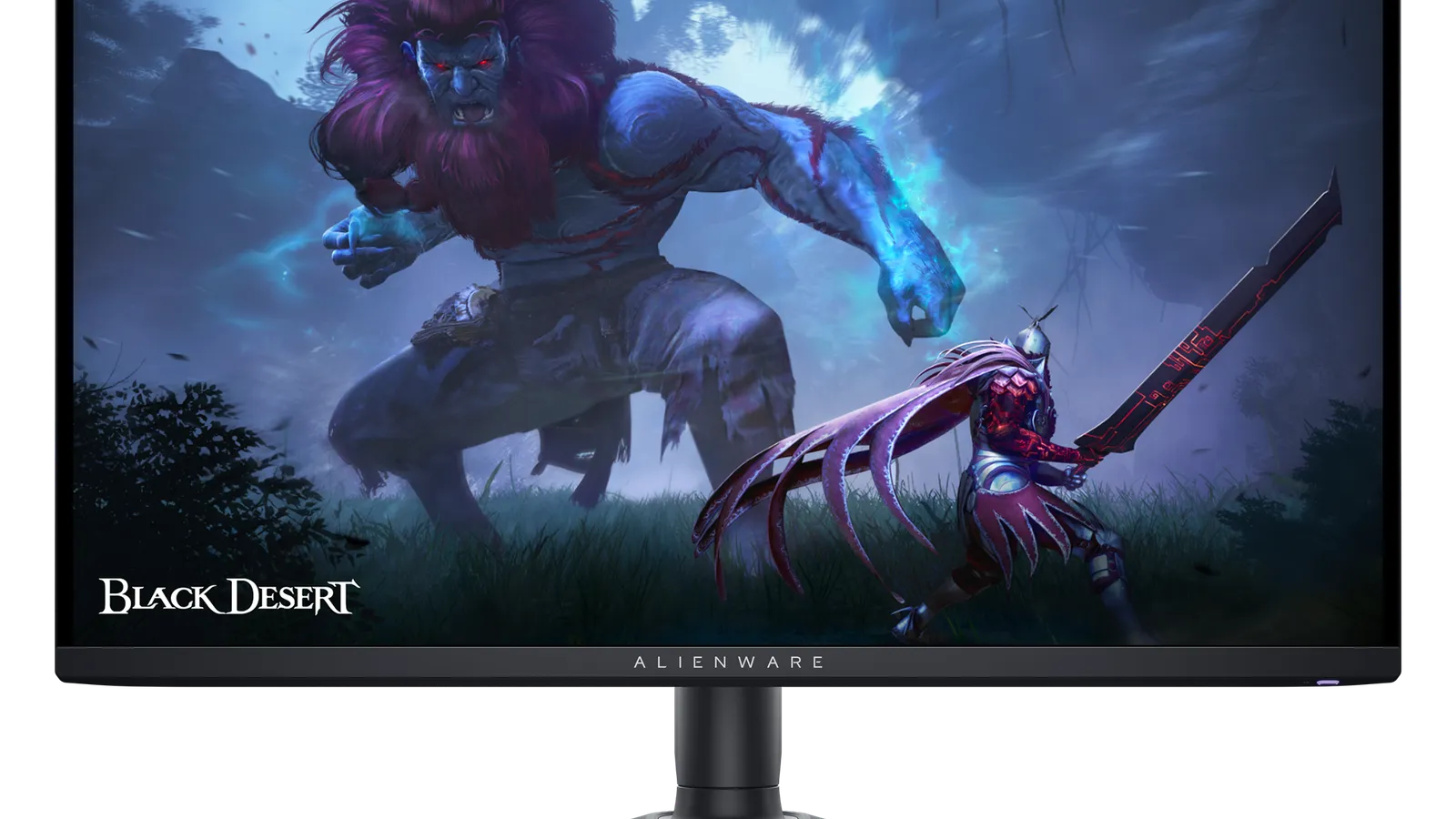
- Brand
- Dell Alienware
- Category
- Monitors
- Where you’ll see it
- 1 buying guide
- Main use
- Best mid-range OLED gaming monitor
Best mid-range OLED gaming monitor
Strong 1440p OLED speed at lower-tier positioning than flagship OLEDs.
Skip it if this caveat matters in your setup: Fewer premium bandwidth/features. That one detail can matter more than the headline spec.
Buying options
Buying options
This page does not show live prices. Use the retailer listing to verify the exact model, size, color, bundle, and return policy before buying.
Quick read
Quick verdict
- Buyer type: PC gamer who wants QD‑OLED speed at 1440p without paying for flagship 4K OLED pricing.
- Gaming role: “Best mid-range OLED gaming monitor” on our gaming shortlist—between budget IPS picks and the ASUS 4K halo.
- Pause: You need 4K pixel density, you confused this SKU with the budget IPS AW2725DM note, or static-desktop OLED habits still worry you.
- How we phrase performance: We describe fit using guide notes and listing checklists—we do not claim independent lab measurements performed by Better Buy Lab.
At a glance
Product snapshot
- Category: Gaming monitor—mid-range 1440p QD‑OLED on our gaming guide.
- Guide placement: Mid-range OLED pick on Best gaming monitors—not the budget IPS AW2725DM lane when that note is live.
- Likely use case: Competitive play and prestige titles at 1440p when GPU headroom is easier than sustaining 4K OLED targets.
- Appears on Better Buy Lab:
- Best Gaming Monitors — Best mid-range OLED gaming monitor
- monitors/best-4k-monitors — Listed on this guide.
- monitors/best-budget-gaming-monitors — Listed on this guide.
- monitors — Listed on this guide.
Key buying checks
How to choose the right monitor for work and games
Match resolution, refresh rate, panel type, and ports to your desk depth, graphics hardware, and whether you mostly work, game, or both. Below is how we think about Dell Alienware AW2725DF for real rooms and daily use.
Match resolution and size to distance and sharpness
Very high resolution only helps if your GPU and content can use it. Too little resolution for a large screen can look soft when you sit close.
Desks where you care about sharp text and UI at a normal viewing distance.
High pixel density can require OS scaling adjustments; low resolution on a large panel looks soft up close.
Panel size, native resolution, scaling comfort, target game frame rates, and cable bandwidth.
Choose refresh rate your system can actually use
A high refresh rate helps when your PC or console can output matching frame rates and your cables support the signal. Film and casual use may not need the highest numbers.
Fast-paced gaming where you will tune graphics settings to match the display.
A high Hz label does not fix cable limits, capped sources, or GPUs already near their limit.
Target refresh rate, adaptive sync support, HDMI or DisplayPort version, and realistic FPS for your main use.
Choose panel type for your room lighting and use
OLED, IPS, VA, and Mini LED differ in contrast, brightness, glow, maintenance, and HDR behavior. Your window placement and desktop habits matter.
Buyers who know their typical room brightness and whether they run static content for long periods.
A panel praised for dark-room use may be a poor fit for an all-day bright office.
Lighting, static content habits, HDR goals, viewing angles, and any maintenance you accept.
Check stand depth, VESA, and cable paths
Deep feet, tight curves, or awkward rear ports reduce usable space for keyboard, mouse, and speakers.
Shallow desks, monitor arms, shared workspaces, or tight speaker placement.
Skipping depth measurements can crowd the keyboard or block shelving.
Footprint, height and tilt range, VESA pattern, port direction, and cable routing.
Check ports and cables before you buy
Port type and cable spec limit refresh, resolution, and charging. Assume USB-C display features are spelled out in the spec sheet.
Laptops, docks, desktops, and consoles on one desk.
Not every USB-C port carries the same video, power delivery, or data capability.
HDMI, DisplayPort, USB-C alt mode, cable labels, charger wattage, and whether the USB hub is useful.
Confirm the exact model before you buy
Model names, regions, and bundles change what is in the box. Check the manufacturer page for your country, the seller listing, warranty text, and which accessories are included.
Buyers who shop online and need the shipment to match the configuration they selected.
Small naming differences can mean different ports, stands, or power adapters between regions.
SKU, country variant, return window, warranty, and that photos match the product you add to the cart.
When headline specifications miss real-world limits
A strong specification can still disappoint if glare, noise, edge cleaning, or return terms do not fit how you use the product.
Buyers who want to compare trade-offs before deciding.
Marketing often assumes ideal conditions; your room, hearing, or layout may differ.
Return policy, upkeep (filters, bags, mop pads), physical fit in the space, and whether the downsides are acceptable.
Buyer scenarios
A few ways shoppers land here
- Competitive gaming: You want OLED motion at 1440p when your GPU targets high frame rates without 4K overhead.
- OLED / fast monitor buyer: You are stepping down from flagship 4K OLED but staying above budget IPS or Mini LED picks.
- Desk setup: Standard 27-inch footprint with room for DP or HDMI routing—measure stand depth before you buy.
- Console or PC: You will confirm VRR and port layout for the sources you actually plug in—not every SKU ships identical firmware.
These moments describe shopper intent—we are not asserting measured frame pacing or adaptive-sync quirks for every GPU stack.
Need sibling picks in plain language next? Jump to Best Gaming Monitors after you jot desk measurements.
Where it fits
These lanes describe who usually arrives from our gaming monitor guide—not a verdict without listing checks.
- Competitive gaming: 1440p OLED when you want speed and contrast without flagship 4K spend.
- OLED / fast monitor buyer: Mid-range QD‑OLED between budget IPS and the ASUS 4K halo on our shortlist.
- Desk setup: Typical 27-inch gaming desk with measured stand depth and cable slack.
- Console / PC use: Confirm HDMI and DisplayPort behavior for each device you plan to attach.
Highlights to confirm
Carry these highlights to the storefront listing—treat them as reminders, not benchmark printouts.
- Strong 1440p OLED speed at lower-tier positioning than flagship OLEDs.
Trade-offs to double-check
- Skip it if this caveat matters in your setup: Fewer premium bandwidth/features. That one detail can matter more than the headline spec.
What to check before choosing
Walk desk-side with measuring tape plus GPU or console already known.
- Resolution: confirm 1440p matches your GPU targets and readability habits—not every buyer needs 4K on 27 inches.
- Refresh rate: reconcile high-Hz marketing with the frame delivery your GPU or console sustains.
- Panel type: QD‑OLED versus IPS budget picks—this SKU is OLED, not the AW2725DM IPS lane.
- GPU match: 1440p is friendlier than 4K but still demands honest settings expectations.
- Desk size: stand depth, arm clearance, and peripheral layout on a measuring tape.
- Ports: DisplayPort and HDMI count, bandwidth, and docking on the listing you trust.
- Stand depth: typing vibration and whether a shallow desk fights the foot.
- OLED burn-in caveat: static HUDs and all-day toolbars deserve mitigations if you mix work and play.
- Brightness and room glare: bright rooms may still favor Mini LED or IPS depending on your tolerance.
Fit filter
Choose if / Skip if
Pair these bullets with refreshed listings—we keep them succinct on purpose.
Choose if
- You want OLED contrast and motion at 1440p without flagship 4K pricing.
- Your GPU comfortably targets high frame rates at 1440p with detail you accept.
- You understand this is not the budget IPS AW2725DM pick—different panel class and guide role.
Skip if
- You need 4K pixel density for productivity or cinematic scale—the ASUS PG27UCDM note is the step-up read.
- You want the lowest desk spend—budget IPS or Mini LED lanes may fit better.
- You refuse OLED static-content habits—IPS or Mini LED alternatives on our guides deserve a look.
- You expected the AW2725DM budget IPS story—open that product note instead; this is the OLED DF SKU.
Stay on-site next
Alternatives & related guides
Bounce across monitors desks and peripherals without leaving Better Buy Lab.
- Monitors hub — branch among gaming, budget, and 4K lanes.
- Best gaming monitors — primary shortlist where this model appears today.
- Best mechanical keyboards when you rethink inputs alongside pixel response.
- Best wireless gaming mouse because pointer feel and desk clutter matter paired with monitors.
- ASUS ROG Swift OLED PG27UCDM product note — flagship 4K QD‑OLED step-up.
- Dell Alienware AW2725Q product note — 4K QD‑OLED value lane—not this 1440p SKU.
- AOC Q27G3XMN product note — budget Mini LED lane.
- Dell Alienware AW2725DM product note — budget IPS pick—not this OLED SKU.
- Monitors category for every monitors guide in this aisle.
FAQ
FAQ
Is this monitor good for gaming?
Our gaming monitor guide positions AW2725DF as the mid-range OLED pick for shoppers who want QD‑OLED speed at 1440p. Confirm adaptive-sync, HDR, and the exact Dell SKU on listings you trust.
Is OLED worth it for gaming monitors?
OLED can deliver exceptional contrast and motion when you accept static-desktop burn-in habits and often pay more than IPS or Mini LED alternatives. Match OLED to competitive play plus cinematic sessions—not to all-day spreadsheets with fixed toolbars—unless you plan mitigations on the listing you trust.
What refresh rate should I look for?
Aim for a refresh class your GPU or console can feed consistently at your resolution. High Hz helps competitive motion when frame delivery keeps pace; otherwise prioritize resolution or panel type first. Confirm adaptive-sync support on the exact SKU—not forum screenshots alone.
Should I choose 1440p or 4K?
Choose 1440p when your GPU targets high frame rates at high detail on a 27-inch desk. Choose 4K when pixel density for productivity and cinematic games matters more than maximum competitive Hz—and your graphics hardware can sustain it. Our gaming and 4K monitor guides frame both lanes without live prices here.
Does Better Buy Lab show live prices on this page?
When this model is eligible, the Buying options section includes a disclosed retailer link. We still do not show live prices or star-style ratings on this page.
Editorial transparency
Better Buy Lab uses this page as a product context note linked from our monitors buying guides—especially Best gaming monitors. It supports shortlist reading; it is not a scored review or a storefront.
We describe fit using guide-level notes and shopper checklists. We do not claim independent lab measurements or calibrated panel benches performed by Better Buy Lab. Notes refresh when listings evolve. Disclosed retailer links on eligible product pages appear in the Buying options section. This page does not show live prices or star-style ratings. Disclosed retailer links appear in the Buying options section above when this model is eligible.
In our guides
Buying guides referencing this SKU today.
Best Gaming Monitors
Best mid-range OLED gaming monitor