Product snapshot
Product snapshot
This page summarizes where Keychron Q5 Max / Q Max Series fits in our buying guides and what to double-check on the retailer listing you are considering.
- Brand
- Keychron
- Category
- Keyboards
- Where you’ll see it
- 1 buying guide
- Main use
- Best mechanical keyboard overall
Best mechanical keyboard overall
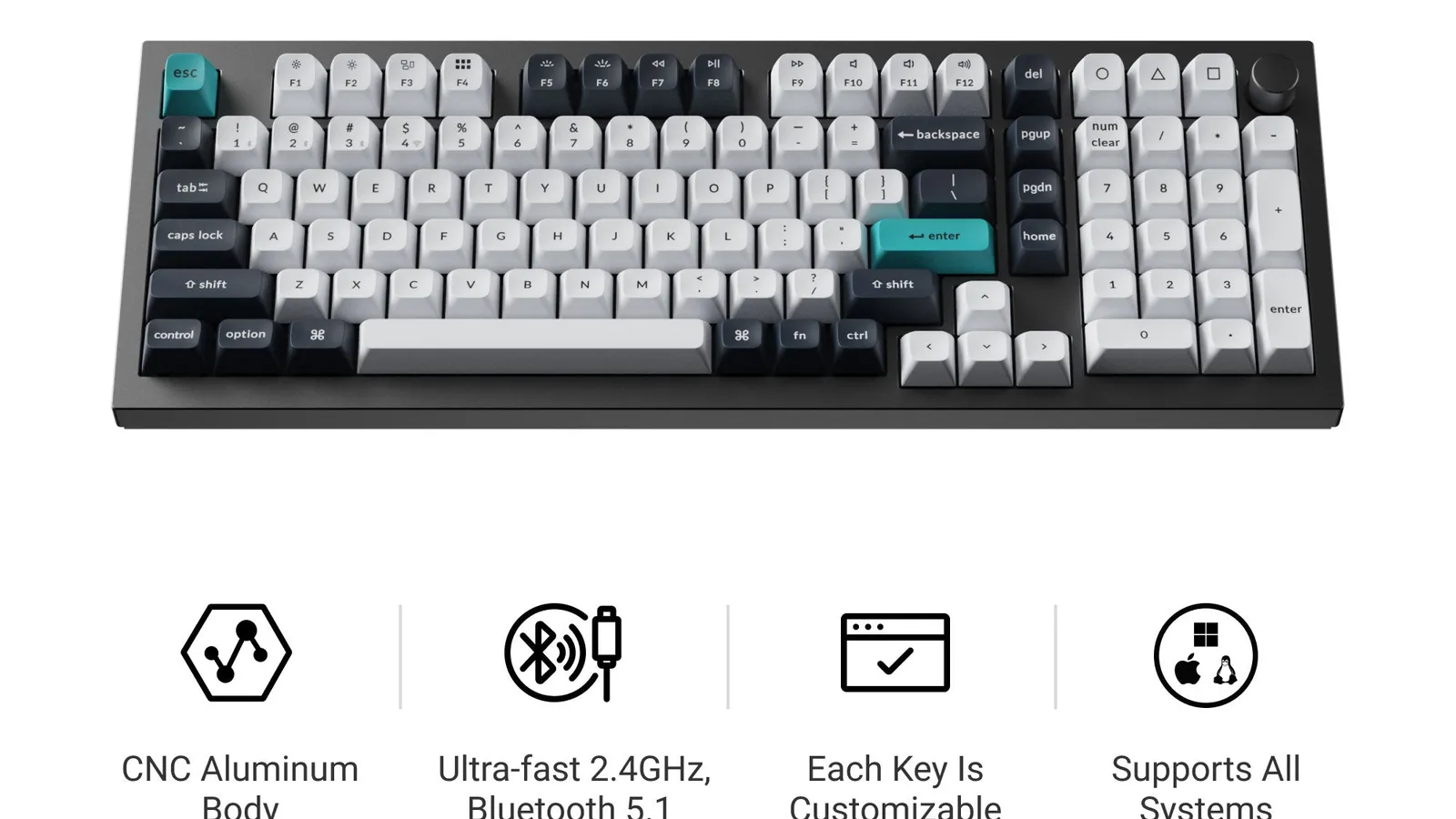
Premium aluminum build, gasket mount, strong typing quality, wireless options, hot-swap support, and multiple layouts.
Skip it if heavy and not the cheapest path into mechanical keyboards.
Buying options
Buying options
This page does not show live prices. Use the retailer listing to verify the exact model, size, color, bundle, and return policy before buying.
Quick read
Quick verdict
- Consider: You want a premium mechanical centerpiece with gasket-style typing feel, sturdy housing, wireless flexibility, hot-swap headroom for switch swaps (per listing details), and a layout that earns dedicated desk space over travel convenience.
- Pause: You need an ultra-quiet open-office keyboard, something you commute with daily, or a minimal-cost introduction to mechanical boards when heavier builds and upfront spend do not suit you.
- No lab claims: Better Buy Lab does not independently test switch samples, keystroke acoustics charts, or wireless latency here—everything routes back to storefront facts plus the guide narrative we publish.
At a glance
Product snapshot
- Keyboard type: Mechanical desktop board anchored in enthusiast build expectations—premium aluminum casing, gasket mount emphasis, configurable wireless behavior as described where you buy.
- Layout / build role: Larger-than-compact footprints (often referenced as semi-compact/full-size-adjacent in marketing) meant to stay planted so typing stays stable during long drafts or mixed work-and-play evenings.
- Listed on Better Buy Lab:
- Best Mechanical Keyboards — Best mechanical keyboard overall
- Likely buyer fit: Buyers who prioritize desk presence, nuanced switch choice, occasional Mac handoff, or wireless convenience when cable clutter would slow them down—not shoppers chasing ounce-count travel boards.
Key buying checks
How to choose a mechanical keyboard you will type on daily
Layout, switch feel, wired or wireless needs, and case quality matter more than lighting features. Below is how we think about Keychron Q5 Max / Q Max Series for real rooms and daily use.
Layout versus keys you use daily
Compact boards save space but may hide punctuation or arrows behind function layers.
Users who know which keys they need for work and travel.
Missing numpad or arrow cluster frustrates spreadsheet and navigation workflows.
Numpad need, arrow keys, function row, travel size constraints.
Switch feel and noise for your environment
Clicky switches are distracting in open offices; hot-swap boards let you change switches later.
Typists who care about tactile feedback and noise limits.
Soldered budget boards lock you into one switch type.
Switch family, noise ceiling, hot-swap support, dampening options.
Wired reliability versus wireless convenience
Bluetooth suits light office use; low-latency wireless or wired suits fast-paced games.
Users who switch between laptop and desktop often.
Some models need software for basic remapping or lighting.
Latency needs, dongle storage, Bluetooth limitations, software dependency.
Case stiffness and typing angle
Flex and hollow sound affect long sessions; adjustable feet or a separate wrist rest may help.
Writers and developers on multi-hour sessions.
Sharp edges or slippery feet reduce comfort even with good switches.
Case material, default angle, aftermarket rest needs, flex in reviews.
Confirm the exact model before you buy
Model names, regions, and bundles change what is in the box. Check the manufacturer page for your country, the seller listing, warranty text, and which accessories are included.
Buyers who shop online and need the shipment to match the configuration they selected.
Small naming differences can mean different ports, stands, or power adapters between regions.
SKU, country variant, return window, warranty, and that photos match the product you add to the cart.
When headline specifications miss real-world limits
A strong specification can still disappoint if glare, noise, edge cleaning, or return terms do not fit how you use the product.
Buyers who want to compare trade-offs before deciding.
Marketing often assumes ideal conditions; your room, hearing, or layout may differ.
Return policy, upkeep (filters, bags, mop pads), physical fit in the space, and whether the downsides are acceptable.
Buyer scenarios
Common reasons readers open this note
- Self-upgrade path: You already hit the limits of shallow laptop keys or spongy membranes and want a durable mechanical centerpiece without drowning in aftermarket speculation.
- Desk reset projects: Keyboard ergonomics clash with reorganized cabling, docks, microphones, monitors—everything steadies once the typing platform stops flexing.
- Hybrid Mac plus Windows workstations: You swap hosts between focus blocks and refuse to keep two keyboards on the laminate.
- Customization curiosity: You intend to revisit switch feel later and need hardware that accommodates swaps when listings confirm kits and sockets.
These vignettes summarize intent—we are not diagnosing office policy or promising wireless reliability in every crowded RF environment.
After jotting wrist angle and connectivity notes below, skim Best Mechanical Keyboards for how we cite siblings beside this pick.
Where it fits
Plain-language snapshots of shopper lanes tied to keyboards—not a persona quiz.
- Premium mechanical keyboard buyer: You deliberately step above entry kits seeking solid housings plus refined typing arcs.
- Typing-heavy desk: Writing, spreadsheets, transcripts, coursework—anything where hours of keystrokes outweigh occasional gaming bursts.
- Mixed Mac and Windows setups: You need repeatable host switching cues without losing legend clarity across OS conventions.
- Hot-swap and personalization curious: You expect to revisit switches later once listings clarify socket types and tooling.
- Build quality ahead of portability: Desk permanence outweighs commuter ounces; you prioritize planted stability over suitcase-friendly dimensions.
Highlights to confirm
Straight from our product sheet copy—bring it while cross-checking the manufacturer storefront.
- Premium aluminum build, gasket mount, strong typing quality, wireless options, hot-swap support, and multiple layouts.
Trade-offs to double-check
- Skip it if heavy and not the cheapest path into mechanical keyboards.
What to check before choosing
Use this checklist with tape measures, switch samples, docking gear, and housemates nearby.
- Layout size: confirm alphanumeric cluster, arrows, macros, navigation rows, plus whether palm rests or desk pads still fit comfortably.
- Switches (stock or swaps): tactile versus linear preference, audible click tolerance, fatigue across long transcripts—match what your household or coworkers will hear.
- Hot-swap support: verify sockets, tooling, firmware expectations, and any listing warnings before buying third-party stems.
- Wireless behavior: USB receiver storage, Bluetooth pairing count, latency sensitivity for rhythm games versus typing-only workloads.
- Desk depth and width: allow for stand feet, dongle adapters, docking cables, angled stands, microphone arms brushing the bezel.
- Noise envelopes: carpets, baffling, nighttime roommates, office etiquette—budget time to dampen pings if needed.
- Wrist posture: tilt feet, adjustable arms, ergonomic trays—pair keyboard height with monitor stack you already settled on.
- Mac versus Windows labeling: legends, shortcuts, dipswitch or software stories for host switching without remapping burnout.
- Software and firmware posture: updater cadence expectations, backlight sync, onboard layers—trust the storefront changelog more than rumor threads.
Fit filter
Choose if / Skip if
Pair these bullets with refreshed listings—keep wording measured.
Choose if
- You prioritize premium mechanical builds, gasket-style typing manners, thoughtful wireless options, and headroom for future switch swaps verified on listings.
- You accept desk weight trade-offs because stability during long drafting blocks matters more than bag-friendly ounces.
- You want contextual guidance tied to Better Buy Lab’s mechanical keyboards shortlist—not an anonymous SKU blurb divorced from sibling picks.
Skip if
- You need near-silent open-office etiquette without room for damping tweaks or swap experiments.
- You need ultralight travel keyboards for frequent moves between workspaces and cramped bags.
- You want an entry-level mechanical board with minimal spend and lowest weight—the caveats card already flags heavier premium builds.
- You refuse any layout planning (measurements, host switching, docking drama) beyond plug-and-play expectations.
Stay oriented
Alternatives & related guides
Keep navigation inside Better Buy Lab so peripherals, monitors, and keyboard lists reinforce one storyline.
- Keyboards hub — mechanical lists and desk guidance.
- Best mechanical keyboards — shortlist that cites this SKU.
- Best wireless gaming mouse — balance pointer weight with keyboard stability.
- Best gaming monitors — display motion beside your typing platform.
FAQ
FAQ
Is this keyboard good for typing?
When listings match gasket-style builds and purposeful switch pairings described in premium mechanical guides, buyers often cite comfort for long drafts. Still confirm acoustics versus your surroundings, backlight needs, wireless stability for your routers, and that the SKU bundle matches tactile expectations—we are not asserting measured force curves.
Is it good for gaming?
It can serve disciplined gaming setups when posture, responsiveness needs, and host switching match wired or wireless realities on the carton you intend to trust. Extremely latency-sensitive arenas may still revisit specialist boards after testing local RF conditions—we keep comparisons grounded in storefront claims, not synthesized latency charts.
What should I check before buying a mechanical keyboard?
Measure desk space, reconcile layout class with spreadsheets or FPS habits, audition switch noise envelopes, inspect hot-swap and tool requirements, rehearse pairing steps for every device, and skim warranty plus return clauses before customizing keycaps extensively.
Is a heavy keyboard a problem?
Only when mobility or cramped trays matter most. Stable mass helps anchored typing but complicates backpacks and shallow monitor stands—decide explicitly whether this board stays home versus shuttling daily.
Does Better Buy Lab show live prices?
No. Shopping links and price callouts arrive only after product details and retailer paths are checked—we keep pages informational until that work finishes.
Editorial transparency
Better Buy Lab uses this page as a product context note linked from our mechanical keyboards buying guides. It supports shortlist reading; it is not a scored review or a storefront.
We describe fit using guide-level notes and shopper checklists. We do not claim independent lab measurements performed by Better Buy Lab. This page does not show live prices or star-style ratings. Disclosed retailer links appear in the Buying options section above when this model is eligible.
In our guides
Buying guides referencing this SKU today.
Best Mechanical Keyboards
Best mechanical keyboard overall