Product snapshot
Product snapshot
This page summarizes where TP-Link Deco BE63 fits in our buying guides and what to double-check on the retailer listing you are considering.
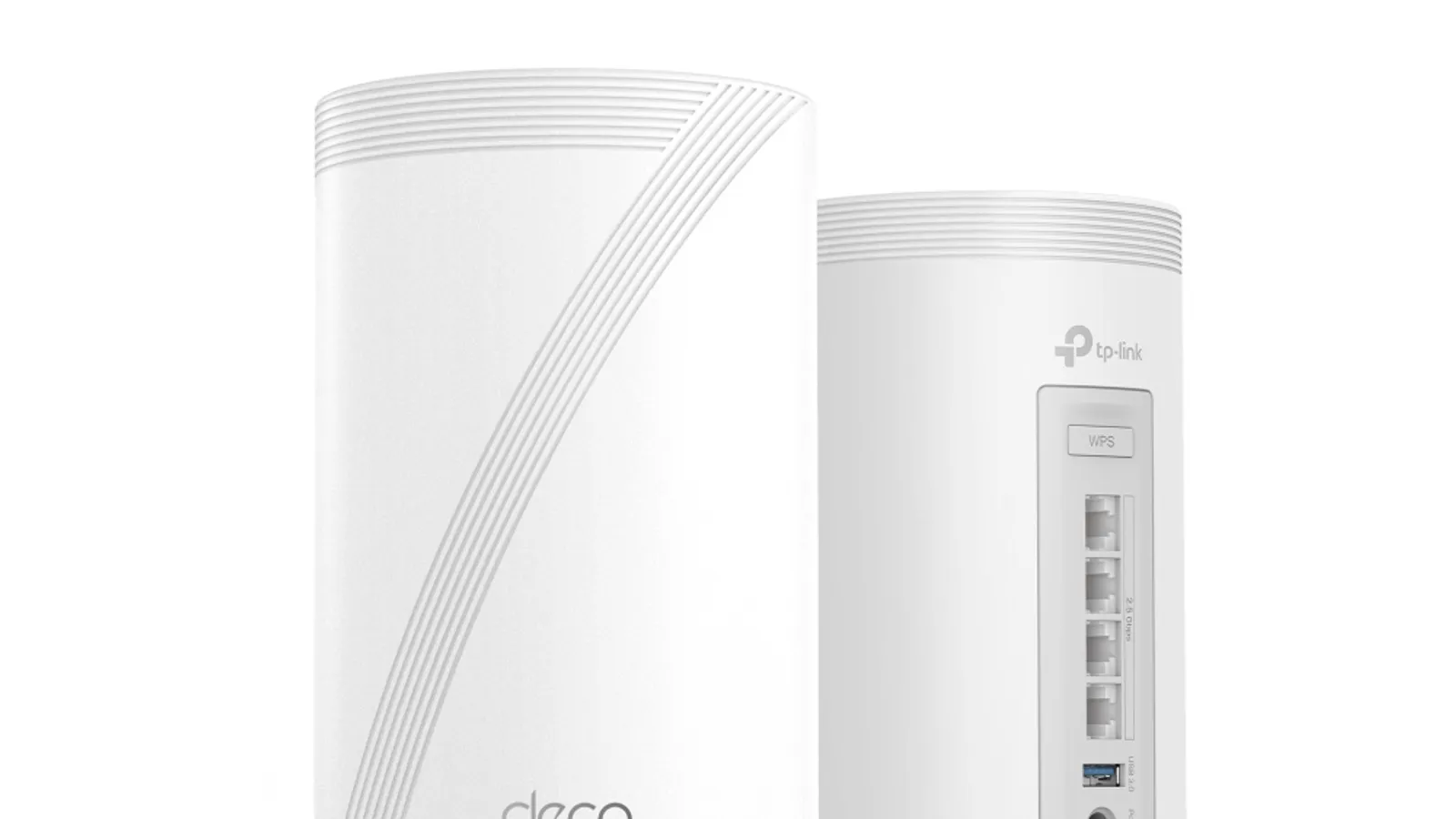
- Brand
- TP-Link
- Category
- Networking
- Where you’ll see it
- 2 buying guides
- Main use
- Best router system for large homes
Best router system for large homes
Tri-band Wi-Fi 7 mesh, strong range, easy expansion, four 2.5Gbps ports per unit, and good value.
Skip it if advanced parental controls/security can require a subscription.
Buying options
Buying options
Use the full buying guide to compare this product against alternatives before choosing.
Quick read
Quick verdict
This product research note is for shoppers who see TP-Link Deco BE63 on our Best mesh Wi-Fi systems shortlist as the Best mesh Wi-Fi system overall pick—not a scored lab review.
- Consider: Tri-band Wi-Fi 7 mesh with multi-gig ports per node when you will verify pack count, HomeShield subscription framing, and wired backhaul options.
- Pause: Read caveats on our product sheet and verify listing SKU, bundle contents, and return policy before checkout.
- No lab claims: Better Buy Lab does not independently measure performance here—use guide narrative plus listing facts you verify.
At a glance
Product snapshot
- Shortlist role: Best mesh Wi-Fi system overall on Best mesh Wi-Fi systems.
- Appears on Better Buy Lab:
- Best Routers for Large Homes — Best router system for large homes | Best mesh Wi-Fi system overall
- Best Mesh Wi-Fi Systems — Best router system for large homes | Best mesh Wi-Fi system overall
- networking — Listed on this guide.
Key buying checks
How to choose home Wi-Fi that covers where you actually sit
Node placement, Ethernet wiring where possible, your ISP tier, and wall layout determine coverage more than the Wi-Fi generation label. Below is how we think about TP-Link Deco BE63 for real rooms and daily use.
Coverage from layout, not marketing square footage
Too few access points leaves dead zones; poor placement wastes hardware. Wall and floor materials attenuate signal.
Multi-story homes and long narrow layouts.
Enclosed shelves and cabinets shield antennas and reduce performance.
Sketch of floors, wall types, Ethernet paths, current weak spots.
Ethernet backhaul when stability matters
Wireless mesh hops share radio capacity with your devices; wired links between nodes reduce that contention.
Homes with heavy video calls and multiple 4K streams.
All-wireless backhaul struggles when many devices compete at peak hours.
Cable routes, switch location, which satellite can be wired first.
Match router tier to ISP and client devices
A new router cannot fix a slow ISP tier or old laptops that never use the new radio bands.
Households with recent phones and laptops on fast fiber or cable tiers.
Multi-gig marketing ignores typical device mix and interference.
ISP speed, modem limits, age of client devices, need for multi-gig LAN ports.
Single router versus multiple nodes
Many apartments improve with better central placement before adding mesh hardware.
Smaller footprints with a logical central location for the router.
Mesh kits are sometimes sold where a relocated router would suffice.
Whether dead zones persist after central placement trials, major obstructions, interference sources.
Confirm the exact model before you buy
Model names, regions, and bundles change what is in the box. Check the manufacturer page for your country, the seller listing, warranty text, and which accessories are included.
Buyers who shop online and need the shipment to match the configuration they selected.
Small naming differences can mean different ports, stands, or power adapters between regions.
SKU, country variant, return window, warranty, and that photos match the product you add to the cart.
When headline specifications miss real-world limits
A strong specification can still disappoint if glare, noise, edge cleaning, or return terms do not fit how you use the product.
Buyers who want to compare trade-offs before deciding.
Marketing often assumes ideal conditions; your room, hearing, or layout may differ.
Return policy, upkeep (filters, bags, mop pads), physical fit in the space, and whether the downsides are acceptable.
Buyer scenarios
A few ways shoppers land here
- Wi-Fi 7 mesh upgrade: You want tri-band headroom for newer laptops and phones without premium eero spend.
- Large-home coverage: You are cross-reading large-home router notes and will compare pack count before checkout.
- Subscription-aware buyer: You will read HomeShield tiers before treating advanced parental controls as included.
- Wired backhaul planner: You can run Ethernet between nodes and want multi-gig ports per unit.
These moments describe shopper intent—we are not asserting measured throughput, wall penetration, or subscription pricing for every floor plan.
After layout and subscription notes below, return to Best Mesh Wi-Fi Systems for how we cite mesh and large-home router lanes on the shortlist.
Where it fits in the networking cluster
TP-Link Deco BE63 is the Wi-Fi 7 mesh overall lane—tri-band range and four 2.5Gbps ports per unit when HomeShield subscription caveats still fit your household.
- Parent guide: Best mesh Wi-Fi systems — Best mesh Wi-Fi system overall lane.
- Category hub: Networking buying guides — sibling lanes and forks.
- Also on: Best routers for large homes — large-home mesh context.
Where it fits
These lanes describe who usually arrives from our mesh guide when Wi-Fi 7 overall mesh fits—not a verdict without floor-plan and subscription checks.
- Wi-Fi 7 mesh upgrade: Tri-band headroom when newer devices justify step-up from Wi-Fi 6E value mesh.
- Multi-gig ports: Four 2.5Gbps Ethernet ports per node matter for NAS, desktop, or wired backhaul plans.
- Large-home mesh: You appear from large-home guides when mesh plus ports beats one distant standalone router.
- Deco versus eero: You are cross-reading eero Max 7 and budget eero 6 notes before checkout.
Highlights to confirm
Pulled from our product sheet—bring it while validating manufacturer pages.
- Tri-band Wi-Fi 7 mesh, strong range, easy expansion, four 2.5Gbps ports per unit, and good value.
- Tri-band Wi-Fi 7, strong range, four 2.5Gbps ports per unit, and easy expansion.
- Large-home pick when mesh plus multi-gig ports per node beats one distant standalone router.
Trade-offs to double-check
- Skip it if advanced parental controls/security can require a subscription.
- Skip it if some advanced features sit behind HomeShield subscription.
What to check before choosing
Pair this list with floor plans, ISP speed tiers, and wired backhaul options nearby.
- Exact model: TP-Link Deco BE63 pack count on the carton—not BE85, BE9300, or older Deco generation unless intended.
- Node count in the box versus your floor plan—two-pack may need a third node for thick walls.
- HomeShield subscription features: confirm which parental controls and security tools require paid tiers.
- Wired backhaul: four 2.5Gbps ports per unit—plan Ethernet runs between nodes if Wi-Fi backhaul is weak.
- ISP speed tier and modem placement relative to the primary Deco node.
- App setup path, firmware update cadence, and account requirements on the listing.
- Return policy if mesh coverage fails after reasonable node placement tests.
Fit filter
Choose if / Skip if
Choose if
- Our mesh shortlist cites Deco BE63 when Wi-Fi 7 range, expansion, and port layout fit your home.
- You will verify pack count, HomeShield subscription framing, and seller accuracy before checkout.
- Wired backhaul or multi-gig desktop paths are part of your plan—not Wi-Fi-only backhaul by default.
Skip if
- Premium simple mesh with minimal subscription friction is the goal—eero Max 7 may fit better.
- Standalone router coverage is enough—Archer BE550 may win when mesh nodes feel excessive.
- You will not verify HomeShield tiers, node count, or return policy before purchase.
Stay on-site next
Alternatives & related guides
Compare mesh, standalone, and large-home paths without leaving Better Buy Lab.
- Networking hub — mesh versus standalone router forks.
- Best mesh Wi-Fi systems — primary mesh shortlist where this model appears today.
- Best routers for large homes — large-home router and mesh context.
- Networking category for every networking guide in this aisle.
FAQ
FAQ
Is TP-Link Deco BE63 good for large homes?
Our guides cite BE63 for large-home mesh when tri-band Wi-Fi 7, range, and multi-gig ports per node fit—still confirm pack count and wall layout before checkout.
Deco BE63 vs eero Max 7?
Choose BE63 when Wi-Fi 7 value, ports per node, and Deco expansion beat premium eero spend. Choose Max 7 when simplest premium mesh and Amazon ecosystem habits justify step-up cost.
What is HomeShield on Deco BE63?
Our notes flag advanced parental controls and security features can sit behind a HomeShield subscription—verify which tools are free versus paid on the listing you trust.
Does wired backhaul matter for BE63?
Yes when Wi-Fi backhaul struggles through thick walls. BE63 advertises four 2.5Gbps ports per unit—plan Ethernet between nodes if placement tests show weak inter-node links.
What should I verify before buying Deco BE63?
Confirm BE63 pack count, node generation, HomeShield tiers, ISP speed fit, app requirements, wired backhaul plan, and seller using the checklist below.
Does Better Buy Lab show live prices on this page?
No. This product note is informational. Shopping links and price callouts appear only on networking buying guides after product and retailer details are checked—not on this standalone page.
Editorial transparency
Better Buy Lab uses this page as a product context note linked from our networking buying guides. It supports shortlist reading; it is not a scored review or a storefront.
We describe fit using guide-level notes and shopper checklists. We do not claim independent throughput or coverage measurements performed by Better Buy Lab. No live prices, shopping buttons, or star-style ratings appear here.
In our guides
Buying guides referencing this model today.
Best Mesh Wi-Fi Systems
Best router system for large homes | Best mesh Wi-Fi system overall
Best Routers for Large Homes
Best router system for large homes | Best mesh Wi-Fi system overall